The Fruit Fear is Real (and Totally Unfounded): Why Sugar from Fruit Isn't Making You Gain Weight
If you are avoiding fruit because you’re worried about fructose, you are missing out on the ultimate fat-loss hack. Here is how to use fruit to your advantage.

Last week, we looked at how eating too quickly and staring at screens completely blunts our body’s built-in digestive system. We talked about how slowing down and listening to our natural satiety signals is a major key to managing weight.
But when it comes to what we put on our plates, there is one incredibly healthy food group that has been completely, unfairly demonised.
Fruit.
In a world obsessed with low carb diets and blood sugar tracking, one of the most stubborn myths is that fruit should be avoided because it contains sugar. We hear warnings about fructose being just as bad as high-fructose corn syrup, leaving people genuinely terrified of eating an apple.
Let’s put this to rest right now: no one is gaining weight or struggling with health issues because they ate too many bananas or berries.
Comparing the natural sugar in a peach to the refined sugar in a soft drink completely ignores how the human body operates. Here is the biological reality of fruit, and how you can use it to crush hunger and feel amazing.
The Packaging is Everything: Why Your Liver Doesn’t Care About Fructose
When you drink a soft drink, refined sugar floods your system almost instantly. Because there is nothing to slow it down, your liver is hit with a massive wave of fructose, which can trigger fat storage and leave you feeling sluggish and hungry shortly after.
But nature doesn’t package nutrients in isolation.
When you eat a piece of whole fruit, that natural fructose is locked inside a cellular matrix of water, essential vitamins, minerals, and crucially, fibre.
This natural structural packaging changes everything:
The Slow Release: Your digestive system has to physically break down the fibre to get to the nutrients. This slows down the release of sugar into your bloodstream.
No Spikes: Instead of a sudden flood, your liver receives a slow, manageable trickle of energy.
Satiety Signals: This slow digestive process gives your stretch receptors and fullness hormones plenty of time to message your brain and let you know you are satisfied.
Whole fruit is not a high sugar hazard; it is a slow burning, high volume energy source.
The 20-Minute Satiety Lag
Have you ever scoffed down a lunch bowl at your desk, felt completely empty, walked to the kitchen to grab a snack, and then 15 minutes later felt painfully, uncomfortably stuffed?
That is the satiety lag in action.
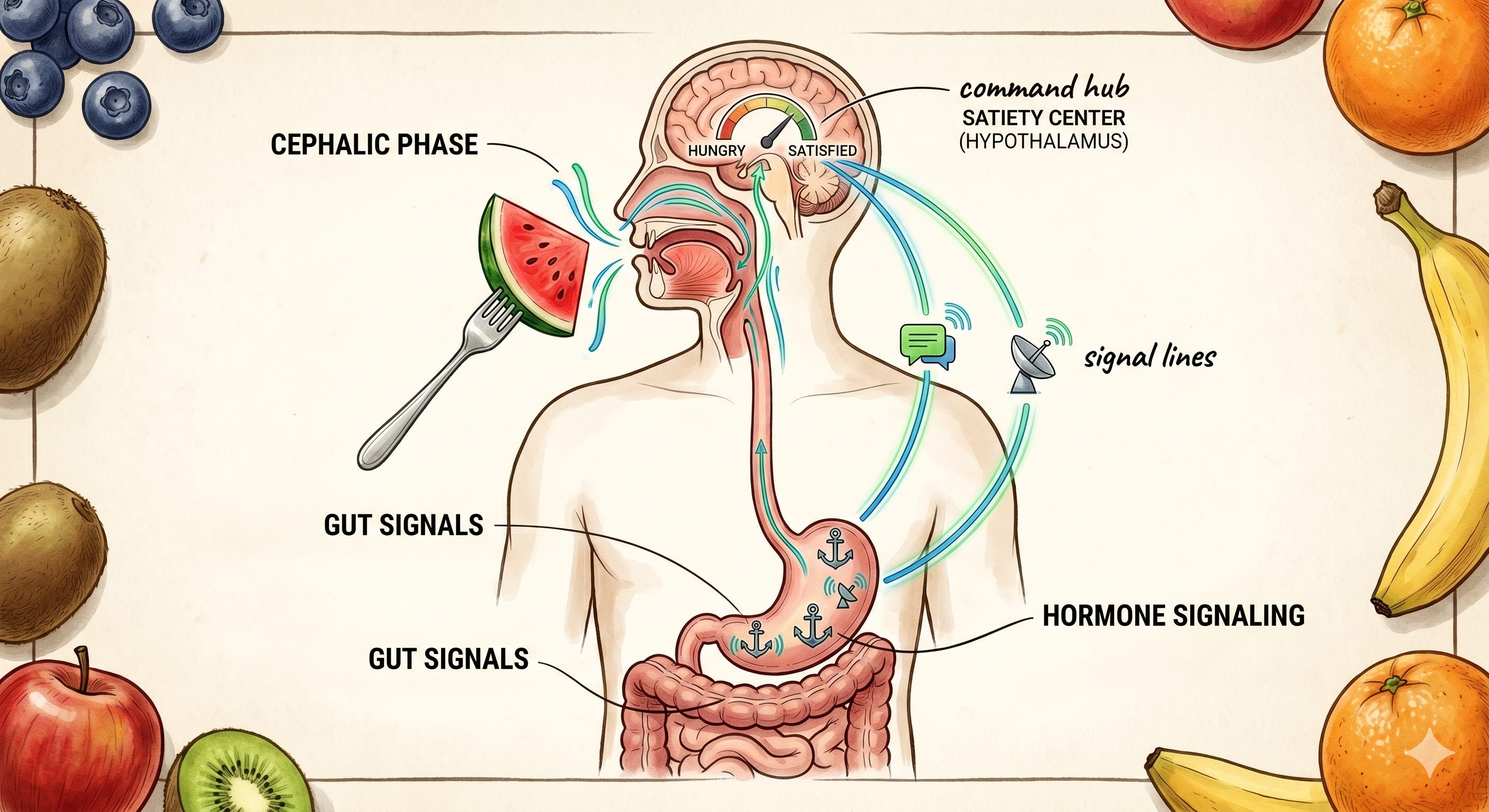
When whole food enters your stomach, stretch receptors are physically activated, and your gut begins releasing internal fullness signals. These chemical messages have to travel through your bloodstream to reach your hypothalamus, the command hub in your brain that tells you to stop eating.
This entire cascade takes roughly 20 minutes.
If you eat slowly: Your brain receives these chemical text messages while you are still chewing. You naturally stop eating because you feel satisfied.
If you scoff your food: You can easily consume double your actual energy needs before the very first signal even hits your brain. You don’t realise you are full until it is far too late.
How your body actually registers fullness. 🧠🍏
Not All Fruits Are Created Equal
To make fruit work for you, it helps to understand that different options serve different purposes in your day. Here are some highly effective profiles to focus on:
The Volume King (Watermelon): If you are trying to manage your weight, food volume is your best friend. Watermelon is incredibly water-dense. This means you can eat a massive portion for very few calories, physically filling your stomach and telling your brain you are full without blowing your daily energy budget.
The Fibre Powerhouses (Berries): Blueberries, raspberries, and blackberries are exceptionally low in calories but packed with prebiotic fibre. This fibre acts like a sponge in your gut, slowing digestion down and keeping you steady and focused for hours.
The Portable Energy Source (Bananas): Fearing bananas is a classic mistake. Yes, they have slightly more carbs than berries, but they are packed with potassium and “resistant starch” (especially if they are slightly green). This starch acts like fibre, digesting very slowly, keeping your energy stable, and feeding your good gut bacteria. Plus, they come in their own natural wrapper, making them the ultimate grab-and-go snack.
The Speed-Bump Champion (Oranges): An orange requires you to stop, peel, and separate the segments. This built-in “speed bump” stops you from mindlessly inhaling your food, while the high water and fibre content physically fill you up.
The Time-Saving Hack (Kiwi Fruit): Here is a simple trick: eat the skin. Washing and slicing a kiwi fruit with the fuzzy skin intact triples the fibre content and saves you the hassle of peeling it. It is sweet, tart, and highly convenient.
Eat Your Fruit, Don’t Drink It
There is a massive biological catch when we stop chewing our food.
Think about it this way: you could easily drink a fresh juice containing four oranges in under sixty seconds. But would you ever sit down at your desk and eat four whole oranges back t back?
Probably not. You would be physically too full by the second or third orange.
Juicing strips away the beneficial fibre entirely. Even blending fruit into smooth juices or smoothies makes digestion so easy that your body bypasses the fullness benefits of chewing. You wind up drinking a large amount of extra calories without ever triggering those essential “I’m full” signals. To keep your hunger in check, make it a rule to chew your fruit.
The Frozen Advantage
Building healthy eating habits shouldn’t feel like a chore. You do not need to buy expensive, exotic fresh produce every single week to stay healthy.
In fact, frozen fruit is one of the most underrated life hacks available. Because it is picked at peak ripeness and flash frozen, it retains all its nutrients, lasts for months in the freezer, and is highly cost effective.
Try This Tonight: Put a handful of frozen blueberries and mango pieces into a bowl of Greek yoghurt. The frozen fruit semi-freezes the yoghurt around it, giving it a rich, ice-cream-like texture. It is a brilliant way to satisfy a sweet craving before bed while getting plenty of protein and nutrients.
Keep your kitchen stocked with easy staples like apples, kiwi fruits, and seasonal options like rockmelon or papaya. When healthy options are pre-packaged by nature and ready to grab, making the right choice becomes completely effortless.
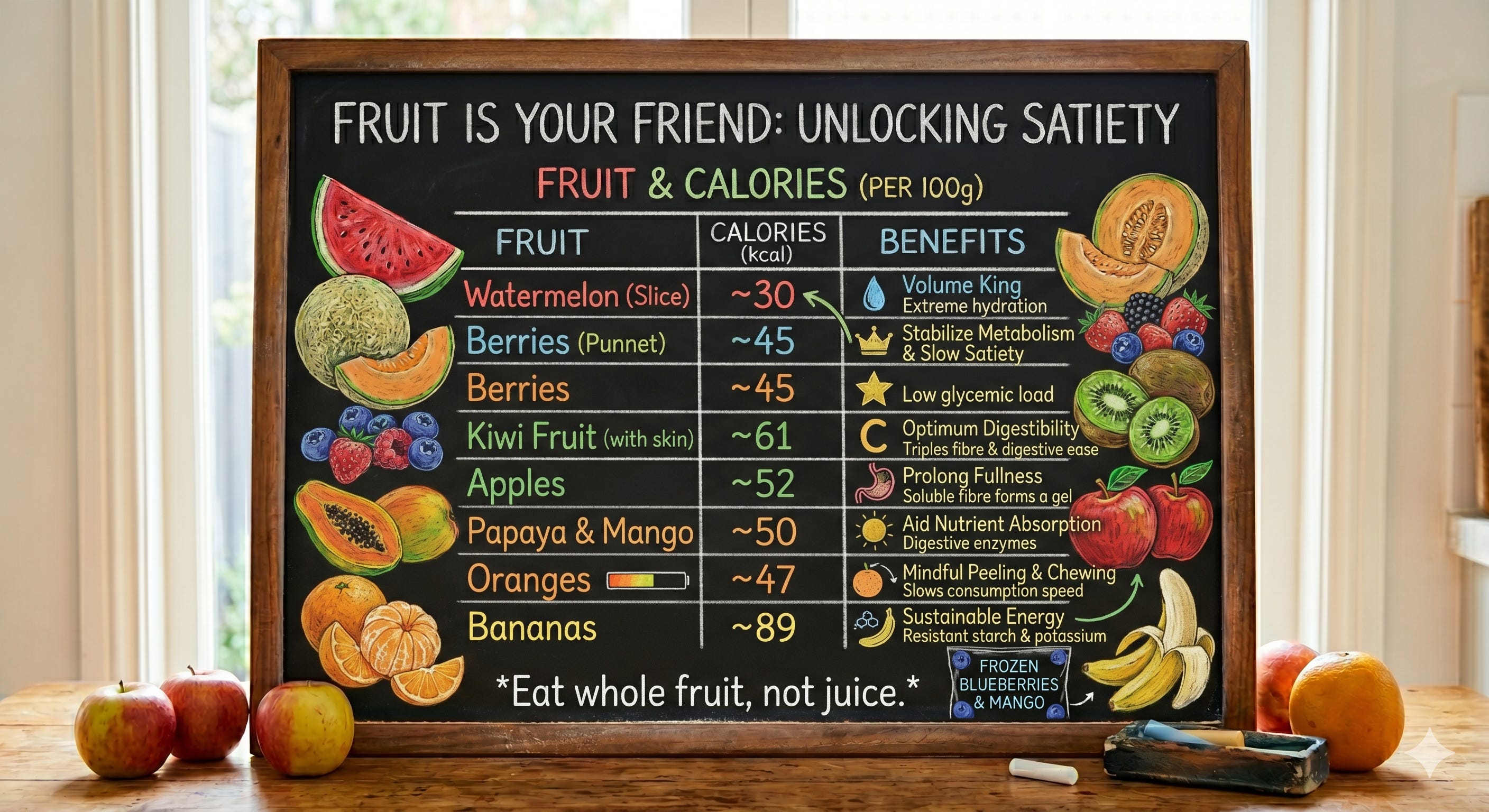
2. Nutritional Comparison (Per 100g)
A quick guide to how different fruits fit into your daily routine:
Watermelon
Primary Benefit: Ultimate stomach filler (The Volume King).
How It Actions Satiety: High water content physically stretches the stomach walls. This signals your brain that you are full without loading your body with excess energy.
Rockmelon (Cantaloupe)
Primary Benefit: Low calorie sweet tooth craving killer.
How It Actions Satiety: Delivers vitamins A and C to assist recovery and skin health while offering a massive portion size for very little energy impact.
Papaya
Primary Benefit: Natural digestive ease and gut comfort.
How It Actions Satiety: Contains natural enzymes (like papain) that help break down proteins and soothe the gut, making it an excellent post-meal option to reduce bloating.
Strawberries
Primary Benefit: Calorie friendly fibre booster.
How It Actions Satiety: Packed with prebiotic fibres that feed beneficial gut bacteria, swelling slightly in the digestive tract to keep you satisfied for longer on very few calories.
Blueberries
Primary Benefit: Cognitive performance and cellular protection.
How It Actions Satiety: High concentrations of anthocyanins (antioxidants) fight inflammation and support brain focus, making them the perfect mid-afternoon energy stabilizer.
Kiwi Fruit
Primary Benefit: Ultimate gut motility and high speed prep.
How It Actions Satiety: Keeping the skin on triples the total fibre. This skin acts like a sweeping brush through your digestive tract, promoting excellent gut movement and steady digestion.
Apples
Primary Benefit: Long lasting hunger control and convenience.
How It Actions Satiety: Loaded with pectin (a unique soluble fibre) which forms a gel-like substance in your stomach. This slows down gastric clearing so you stay fuller for hours after eating.
Bananas
Primary Benefit: Sustained, portable energy and gut health.
How It Actions Satiety: Rich in potassium and resistant starch (especially when slightly yellow-green). Resistant starch resists digestion in the small intestine, acting as a prebiotic that digests slowly and prevents sharp energy crashes.
Oranges
Primary Benefit: Mindful eating “speed bump” and hydration.
How It Actions Satiety: High water content and cellular fibre combine to fill the stomach, while the physical act of peeling slows down eating speed, giving your satiety hormones time to register.
Mango
Primary Benefit: High energy nutrient boost and dessert-like satisfaction.
How It Actions Satiety: Rich in folate and Vitamin A, its natural sweetness acts as a perfect, dense replacement for processed sweets when paired with a clean protein source like Greek yoghurt.
3. Weight Loss Benefits & Important Considerations
Keep these simple physical and behavioural principles in mind to get the most out of your fruit choices:
Why Fruit Supports Weight Loss:
The Power of Chewing: The physical act of chewing triggers hormones in your gut that tell your brain food is arriving. This chemical feedback loop is essential for satiety, and it is completely missing when you drink your food.
The “Crowding Out” Strategy: Instead of focusing on strict rules about what you can’t eat, focus on adding two servings of fruit to your daily routine. This naturally crowds out less nutritious, calorie dense snacks. If you eat an apple at 3:00 PM, you simply won’t have the space or the craving for the office biscuit tin.
Things to Be Mindful Of:
The Dried Fruit Calorie Trap: Dried fruits (like sultanas, dates, and dried apricots) have had all their water removed. They are highly concentrated and incredibly easy to overeat. A handful of grapes is a satisfying snack; the equivalent amount of sultanas is gone in one bite but contains the exact same amount of energy.
Added Sugars in Canned Fruit: Canned fruit is highly convenient, but make sure to choose options packed in natural juice rather than heavy syrup, which adds empty refined sugars.
Dental Health: Because fruit contains natural acids and sugars, it is best to eat them as part of your main meals or dedicated snacks rather than grazing on them continuously throughout the day to protect your teeth.